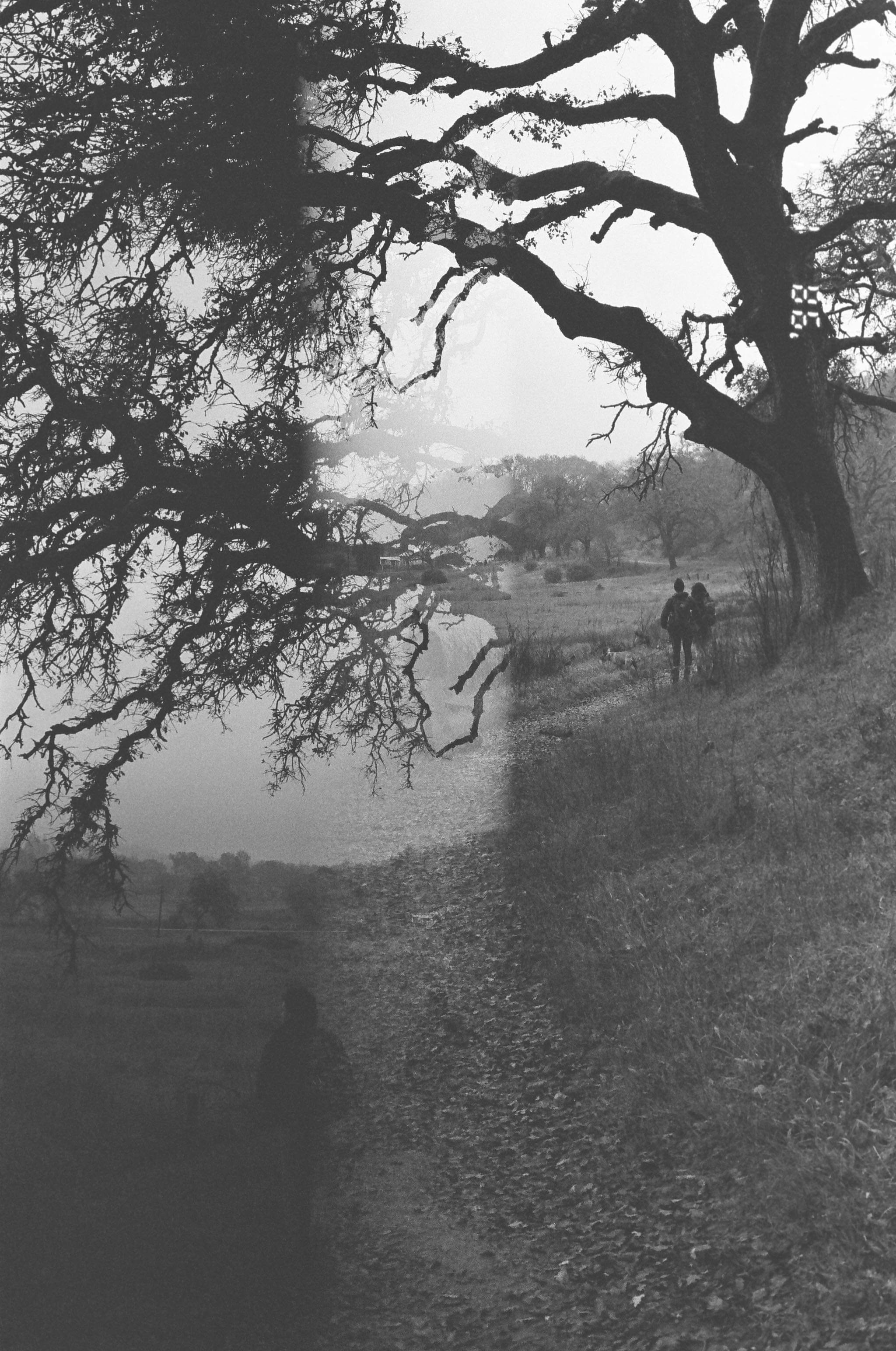
Appel à communications
Reading makes love to me
Vers et pour une pratique amoureuse de la lecture
Colloque organisé par Lucia Baroni, Gabrielle Chartrand, et Emmanuelle Passelande
Université de Montréal, Québec, Canada, 7 et 8 mai 2026
I/who spread over the land / the splendid brilliance/ of your divinity / you allow my flesh / to know your scourging
(Enheduanna, 2006, p. 134).
Car si je te regarde, même un instant, je ne puis plus parler. Mais d’abord ma langue est brisée
(Sappho, 2005, p.39).
Poets and novelists, like lovers, touch that space to life with their metaphors and subterfuges. The edges of the space are the edges of the things you love, whose inconcinnities make your mind move.
(Carson, 2022, 123).
La tradition littéraire qui conçoit l’amour comme un pont (metaxu) entre la transcendance et l’immanence est ancienne, tout comme la présence du désir, du manque, de la corporalité troublée par l’amour est inhérente au texte littéraire. Au cœur de sa dévotion totale au culte d’Inanna, la chair de la prêtresse Enheduanna se fait le réceptacle d’un savoir sacré à l’origine des vers et des hymnes de la poétesse. Troublée par la contemplation de la beauté idéale, de passage dans les corps éphémères de ses amantes, la langue de Sapphô se brise dans la tentative de nommer l’Eros. Dans le Banquet de Platon, Socrate fait appel à Diotime, figure féminine subversive dans un environnement exclusivement masculin, qui réaffirme le pouvoir transcendant de l’eros, le distingue du désir périssable et éphémère du corps juvénile. L’éros, désir inassouvissable pour la beauté idéale, s’apparente à une tension vers la connaissance: « En tout cas, pour ce qui me concerne du reste, c’est un fait que parler moi-même de philosophie ou entendre quelqu’un d’autre en parler, constitue pour moi, indépendamment de l’utilité que cela représente à mes yeux, un plaisir très vif » (Platon, 2016, 60). À travers des modalités différentes, les vers de Sapphô, la plainte d’Enheduanna et le discours de Diotime incarnent ou pensent l’idée d’une pratique amoureuse, alliant à la fois un acte littéraire de métaphorisation et une conceptualisation critique (philosophique, spirituelle, littéraire) radicale. En continuité avec cette pensée préoccupée par l’amour en tant que concept riche de potentiel d’interprétation, un ensemble de productions littéraires, savantes et artistiques contemporaines réaffirme le potentiel politique, philosophique et conceptuel d’une pratique amoureuse de la lecture.
Qu’est-ce qu’une pratique amoureuse et comment se distingue-t-elle ? Le désir qui habite l’amant·e est-il le même que celui qui anime le lecteur ? Pourquoi la littérature se présente-t-elle comme un espace susceptible d’interroger la question de l’eros? Comment proposer, à même la matérialité de l’écriture et à partir de l’acte de lecture, une réflexion réellement radicale sur l’amour? Comment est-il possible de réaffirmer la charge épistémologique de l’amour? Comment lire comme un·e amant·e?
À travers des réflexions proposant un rapport analogique entre l’acte de lecture et la pratique amoureuse, plusieurs voix investiguent d’autres modes de relation au et avec le texte. Par exemple, le geste du copiste, répétant, modifiant et intériorisant le contenu du texte au rythme de la temporalité de l’écriture manuscrite, tisse un lien amoureux avec l’objet littéraire, en le travaillant à bras le corps, au sein de sa matérialité physique et de son contenu intangible. N’entretenant point une dynamique d’emprise du texte, sa pratique incarne davantage un procédé mémoriel, porté par la vocation de réactiver la charge épistémologique du texte, d’assurer sa postérité. Selon Anne Carson, la lecture comme l’amour mettent en jeu un mouvement de triangulation, semblable à la métaphore, où le sujet se heurte aux limites de son être et de son corps : « The words we read and the words we write never say exactly what we mean. The people we love are never just as we desire them. The two symbola never perfectly match. Eros is in between.» (Carson, 2022, 122) Les corps et les mots énoncés pour les nommer résistent à toute adéquation totale et c’est dans l’espace-frontière du désir que s’anime ce mouvement inlassable de recherche, de tâtonnement, d’expérimentation. La douleur du manque, inhérente à l’amour comme à la lecture, relie ces deux expériences: l’élan vers l’autre est à la fois souffrance et joie, perte et expansion. Deleuze conçoit quant à lui que la connaissance ne naît pas de la bonne volonté, mais de la rencontre, d’un choc sensible qui constitue la pensée même : « La pensée n’est rien sans quelque chose qui fait violence à la pensée. » (Deleuze, 2014, 104) Le temps amoureux altère les êtres et fait éclore en elleux les potentialités affectives et intellectuelles des textes.
Dans L’Anti-Œdipe, Gilles Deleuze et Félix Guattari affirment d’ailleurs que le désir n’est pas issu du manque, mais représente un processus continu de production entre flux et coupures: « Les machines désirantes sont des machines binaires, à règle binaire ou régime associatif ; toujours une machine couplée avec une autre » (Deleuze et Guattari, 1972, 11). Le texte devient machine, un corps linguistique qui produit un flux de sens, chaque geste de lecture devenant une expérience physique, le corps du lecteur s’unissant avec le texte. Au-delà d’un mouvement vers la connaissance qui passerait par cette pratique de l’amour, Barthes affirme que le texte de jouissance offre une expérience de perte de soi proche de celle de l’amour, le texte devenant un corps qui s’offre et se retire : « Ce n’est pas ma subjectivité que je retrouve, mais mon corps de jouissance… sujet anachronique, en dérive. » (Barthes, 2000, 125–126). Le plaisir ne provient pas de la compréhension, mais du désir, et il émerge précisément lorsque le texte résiste; le plaisir vient de la perte, de la défaillance du sujet face au jeu de langage. Dans Fragments d’un discours amoureux, Barthes retrouve cette déchirure, cet espace où se lit, se (dé)lit, notre être. Julia Kristeva, dans Pouvoirs de l’horreur, montre que le langage pulse, que le corps s’y inscrit, que l’écriture devient un geste vital, une mémoire et une répétition du manque. L’abjection de soi serait la forme culminante de l’expérience du sujet qui fonde son identité sur une perte initiale: « Rien de tel que l’abjection de soi pour démontrer que toute abjection est en fait reconnaissance du manque fondateur de tout être, sens, langage, désir » (Kristeva, 1980, 13).
Le concept du manque, qui constitue à la fois une condition nécessaire au sens et à la parole, ainsi qu’une motivation fondamentale de l’écriture destinée à combler un vide de représentations, innerve la réflexion sur la « post mémoire » (Marianne Hirsch, 2014). Cette dimension de la mémoire se transmet à travers des images, des récits et des gestes corporels, chacun d’entre eux contenant une séparation, une perte, mais aussi un espace de rencontre: celui du corps face au temps grâce au texte. Cette pratique mémorielle s’accompagne d’une posture de désir, certes radicalement différente de celles décrites auparavant, mais qui réside tout de même dans une volonté de réparation amoureuse.
De ces lectures amoureuses se dégage une potentialité de réorientation : lire ou savoir amoureusement s’aménage dans le rejet d’un paradigme de maîtrise et nécessite une ouverture à la déviation d’une trajectoire identitaire monolithique, finie et immuable. Pourtant, dans le même temps de réaffirmation de ces pratiques repensant radicalement le rapport à l’Autre, la rhétorique de l’amour se trouve également détournée et appropriée par des entités fascistes, comme pointé par Sara Ahmed: « Love is narrated as the emotion that energises the work of such groups [hate groups] ; it is out of love that the group seeks to defend the nation against others, whose presence then becomes defined as the origin of hate » (Ahmed, 2004, 142). Pour qu’une pratique de l’amour conserve toujours la possibilité d’aller à rebours des usages normatifs, de révéler une agentivité dans le jeu de triangulations du désir, une reconfiguration épistémologique continue se présente comme une nécessité indéniable.
Pour cette édition du colloque, nous avons ciblé plusieurs axes et angles d’approche. Les propositions peuvent porter, sans devoir s’y limiter, sur les thèmes suivants :
• Pratiques littéraires amoureuses
• Études écocritiques, féministes et queer, afropessimistes;
• Philosophie de l’eros et du désir;
• Post-mémoire;
• Philologie, sémiotique et linguistique: lien avec le texte comme objet d’amour;
• Intermédialité, transdisciplinarité, traduction;
• Création;
• Mythocritique, mythanalyse;
• Politique, Esthétique, Histoire de l’art;
• Objet d’amour; muséologie, archivistique, restauration;
• Etc.
Nous accueillerons des propositions de communication de 500 mots, et ce, jusqu’au 8 février 2026, pour le colloque qui se tiendra le 7 et 8 mai 2026. Comme la sélection du contenu se fera de manière anonyme, nous vous demandons d’envoyer deux copies de votre texte dans le même courriel à l’adresse : redaction@post-scriptum.org, l’une avec vos coordonnées (nom, prénom, adresse courriel, téléphone) et l’autre non identifiée. Pour toute question, n’hésitez pas à contacter l’équipe de Post-Scriptum via notre adresse courriel, ou les organisatrices du colloque: Emmanuelle Passelande (emmanuelle.lea.passelande@umontreal.ca), Gabrielle Chartrand (gabrielle.chartrand.3@umontreal.ca) et Lucia Baroni (lucia.baroni@umontreal.ca).
Reading Makes Love to Me
Towards a Loving Practice of Reading
I/who spread over the land / the splendid brilliance / of your divinity / you allow my flesh / to know your scourging
(Enheduanna, 2006, p. 134)
For when I look at you, even a moment, no speaking/is left in me / no: tongue breaks and thin / fire is racing under the skin
(Sappho, 2002, p.63)
Poets and novelists, like lovers, touch that space to life with their metaphors and subterfuges. The edges of the space are the edges of the things you love, whose inconcinnities make your mind move.
(Carson, 2022, 123)
The literary tradition that conceives of love as a bridge (metaxu) between transcendence and immanence is ancient, just as the presence of desire, yearning, and of a “troubled by love” corporeality is inherent to literary texts. At the heart of her total devotion to the cult of Inanna, the priestess Enheduanna’s flesh becomes the vessel of a sacred knowledge at the origin of her verses and hymns. Troubled by the contemplation of ideal beauty, passing through the ephemeral bodies of her lovers, Sappho’s language breaks in her attempt to name Eros. In Plato’s Symposium, Socrates calls upon Diotima, a subversive feminine figure in an exclusively masculine environment, who reaffirms the transcendent power of eros, distinguishing it from the perishable and ephemeral desire for the youthful body. Eros, the unquenchable desire for ideal beauty, is not unlike the tension toward knowledge: “ And anyway, when I talk about philosophy myself or listen to others do so, quite apart from thinking I’m benefited, it’s extraordinary how much I enjoy it […] ” (Platon, 1993, 112). Through different modalities, Sappho’s verses, Enheduanna’s lament, and Diotima’s discourse embody or conceptualise the idea of a loving practice that combines both a literary act of metaphorization and a radical critical (philosophical, spiritual, literary) conceptualisation. Within this line of thought concerned with love as a concept rich in interpretive potential, a set of contemporary literary, scholarly, and artistic productions reaffirms the political, philosophical, and conceptual potential of a loving practice of reading.
What is a loving practice, and how can it be characterised? Is the desire that inhabits the lover the same as that which animates the reader? Why does literature present itself as a space capable of interrogating the question of eros? How can one propose, through the materiality of writing and starting from the act of reading, a truly radical reflection on love? How is it possible to reaffirm the epistemological charge of love? How does one read like a lover?
Through reflections that suggest an analogical relationship between reading and the practice of love, several voices investigate alternative modes of relating to and with the text. For instance, the gesture of the copyist (that repeats, modifies, and internalises the content of the text at the pace of handwritten temporality) weaves a loving bond with the literary object, physically working through and with it, within both its materiality and its intangible content. Outside of a dynamic of domination over the text, this practice embodies a process of remembrance driven by the intention to reactivate the epistemological charge of the text, to ensure its posterity. According to Anne Carson, reading as a lover involves a movement of triangulation, similar to metaphor, in which the subject encounters the limits of their being and their body: “The words we read and the words we write never say exactly what we mean. The people we love are never just as we desire them. The two symbols never perfectly match. Eros is in between” (Carson, 2022, 122). Bodies and the words uttered to name them resist any total adequation, and it is in the border-space of desire that this tireless movement of searching, groping, and experimenting comes alive. The pain of yearning, inherent to both love and reading, links these two experiences: the impulse toward the other is at once suffering and joy, loss and expansion. Deleuze implies that knowledge does not arise from goodwill but from an encounter, from a sensory shock that constitutes thought itself: “Thought is nothing without something that forces and does violence to it” (Deleuze, 2000, 95). Therefore, the temporality of love alters beings and opens within them the affective and intellectual potentialities of texts.
In Anti-Oedipus, Gilles Deleuze and Félix Guattari further assert that desire does not stem from lack but represents a continuous process of production between flows and breaks: “Desiring-machines are binary machines, obeying a binary law or set of rules governing associations: one machine is always coupled with another ” (Deleuze et Guattari, 1994, 5). The text becomes a machine, a linguistic body that produces a flow of meaning; each act of reading becomes a physical experience as the reader’s body joins with the text. Beyond a movement toward knowledge through this practice of love, Barthes asserts that the texte de jouissance offers a similar experience to the loss of self caused by love. The text becomes a body that offers and withdraws itself at the same time: “It is not my subjectivity that I find, but my body of bliss… an anachronistic subject, adrift ” (Barthes, 1975, 62). Pleasure does not arise from understanding but from desire, and it emerges precisely when the text resists. Pleasure comes from loss, from the subject’s faltering when met with language’s tricks. In Fragments d’un discours amoureux, Barthes revisits this space where our being is read and undone. Julia Kristeva, in Pouvoirs de l’horreur, shows that language pulses, that the body inscribes itself within it. Writing becomes a vital gesture, a lack/want repeated and remembered. The abjection of the self would be the culminating form of the subject’s experience, one who grounds their identity on an initial loss: “ There is nothing like the abjection of self to show that all abjection is in fact recognition of the want on which any being, meaning, language, or desire is founded” (Kristeva, 2010, 5).
The concept of want, which constitutes both a necessary condition for meaning and speech and a fundamental motivation for writing intended to fill a void in representation, permeates the reflection on “postmemory” (Marianne Hirsch, 2014). This dimension of memory is transmitted through images, stories, and bodily gestures, each containing a separation, a loss, but also a space of encounter: that of the body facing time through the text. This memorial practice comes with a posture of desire, radically different from those described earlier, but still grounded in a yearning for loving repair.
From these loving reading practices emerges a potential reorientation. To read or to know lovingly is to reject a paradigm of mastery. It requires a willingness to deviate from a monolithic, finite and immutable identity trajectory. Yet, while these practices that rethink the relation to the Other are being reaffirmed, the rhetoric of love is also diverted and appropriated by fascist entities, as pointed out by Sara Ahmed: “Love is narrated as the emotion that energises the work of such groups [hate groups]; it is out of love that the group seeks to defend the nation against others, whose presence then becomes defined as the origin of hate’’ (Ahmed, 2004,142). For a practice of love to always retain the possibility of going against normative uses and to reveal an agency in the triangulations of desire, a continuous epistemological reconfiguration appears as an undeniable necessity.
For this edition of the conference, we have identified several themes and possible approaches. Proposals may address, without being limited to, the following topics:
• Loving literary practices;
• Ecocritical, feminist and queer, Afropessimist studies;
• Philosophy of eros and desire;
• Postmemory;
• Philology, semiotics, and linguistics: the relationship with the text as an object of love;
• Intermediality, transdisciplinarity, translation;
• Creation;
• Myth criticism, myth analysis;
• Politics, Aesthetics, Art History;
• Objects of love: museology, archiving, restoration;
• Etc.
We will accept 500-word proposals until February 8th 2026, for the conference to be held on May 7–8, 2026. As submissions will be evaluated anonymously, we ask that you send two copies of your proposal in the same email to: redaction@post-scriptum.org — one including your contact information (name, first name, email address, phone number) and the other anonymous. For any questions, please feel free to contact Post-Scriptum through our email address, or the conference organizers: Emmanuelle Passelande (emmanuelle.lea.passelande@umontreal.ca), Gabrielle Chartrand (gabrielle.chartrand.3@umontreal.ca), and Lucia Baroni (lucia.baroni@umontreal.ca).
- Image de couverture
- Anthony Dubé
- Organisateur·rice(s)
-
- Lucia Baroni
- Gabrielle Chartrand
- Emmanuelle Passelande
- Date limite
- 8 février 2026
- Date de l’évènement
- 7 mai 2026